
The Email That Knew It Was Tuesday Morning
It is 7:38 a.m. on a Tuesday and Sarah, the operations director at a mid-sized Houston firm, glances at her phone over coffee. Three new emails are sitting in the inbox; two she will not read this week. The third has the subject line "Sarah, your renewal options for the Houston office," and inside is two short paragraphs referencing the office she actually leases, the renewal date she actually has on the calendar, and a single concrete next step. She replies in ninety seconds. Twelve minutes later she is on a calendar invite.
This is not a hypothetical. It is the operating reality of any business using a modern CRM with AI-powered marketing automation sequences turned on. Litmus, the email analytics authority, has documented for years that engagement varies enormously by send time, audience segmentation, and personalization depth, and that the gap between generic sends and tightly tuned ones is far wider than most marketers behave as if it is. The 2026 CRM stack ships the capability that closes the gap inside the workflow rather than as a bolt-on tool.
This article walks through what an AI-powered email sequence actually does, why send-moment optimization is the highest-leverage of the AI capabilities, how generative content fits without crossing the brand line, the metrics that matter in production, and the path Authority Solutions® AI Services uses to deploy the stack without breaking the team's voice.
Why the Send Moment Decides the Open
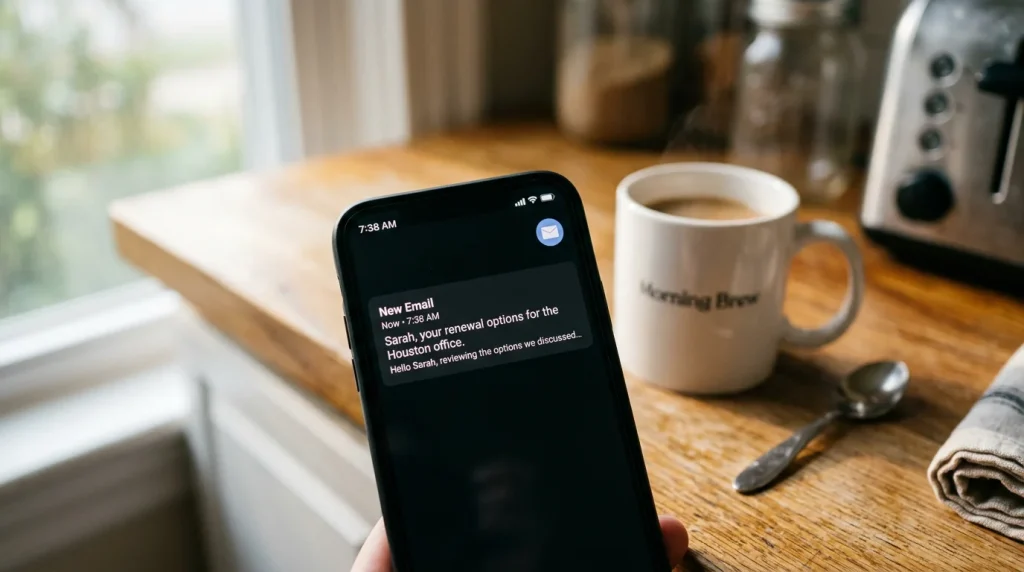
The single biggest factor in whether an email gets opened is the moment it arrives, not the subject line or the brand. The trained AI sequence learns when each recipient actually opens email and routes the send to that window.
The send-moment optimization layer covers:
- Per-recipient open-time patterns. The system learns from historical open data when the recipient typically engages with email. Morning commuter, mid-day desk, after-dinner phone scroll, weekend catch-up. Each has a different optimal window.
- Day-of-week effects. Tuesday and Wednesday mid-morning over-index for B2B opens in most US markets; Friday afternoon under-performs across the board. Send timing should reflect this and the per-recipient signal that overrides it.
- Time zone alignment. The system sends in the recipient's local time, not the sender's. Obvious in theory, frequently broken in practice.
- Behavioral triggers as a priority over schedule. When the recipient performs an action that suggests intent (visits a pricing page, opens the previous email, returns a calendar invite), the next sequence email moves to immediate send, overriding the calendar.
- Anti-fatigue throttling. The system suppresses sends when the recipient has received too many recent touches across any channel, preventing the unsubscribe that comes from over-eagerness.
Send-moment optimization alone, with no other changes to copy or audience, typically lifts open rates by twenty to forty percent in the first quarter, depending on the baseline. Authority Solutions® Marketing Automation configures the per-recipient learning layer for each engagement.
What Generative Content Actually Earns You
Generative content inside the sequence is where the AI stack adds the second large lever. Done well, it raises reply rates and conversion. Done badly, it produces uncanny-valley copy that hurts the brand. The discipline that separates the two:
- Brand voice grounding. Every generative call is conditioned on the brand voice document, the audience persona, and one or two example outputs. The voice does not drift.
- Recipient-specific context. The model receives the recipient's industry, role, recent engagement, and the deal context. Generic "I noticed you visited our site" emails are replaced with specific "Sarah, your office renewal is May 31 and you opened the renewal-options page last week" emails.
- Human approval on the high-stakes tier. The AI drafts; a marketer reviews the renewal, expansion, and recovery sequences. The lower-stakes nurture tier ships without human review once the brand voice has been validated.
- A library of approved templates the AI extends rather than replaces. Generative is most effective inside a structure the team has already validated. The AI fills the personalized parts; the structural skeleton is approved copy.
The combination produces emails the recipient experiences as written for them, by someone who knew what they were dealing with, on the morning they wanted to think about it, and Authority Solutions® CRM Implementation wires the recipient context layer into the platform of record.
Behavioral Triggers as the Real Conductor
A schedule-based sequence sends on day 1, day 3, day 7, day 14. A trigger-based sequence sends when the recipient does something. The trigger-based version dramatically outperforms because it meets the recipient at the moment of intent rather than the marketer's arbitrary calendar.
The trigger taxonomy:
- Site behavior. Pricing page visit, demo request, blog read on a specific topic, return visit after a quiet period.
- Email engagement. Open on a specific email, click on a specific link, forwarding, replies.
- CRM events. Stage progression, contract renewal date approaching, support ticket opened or closed, NPS response.
- External signals. Funding announcement, leadership change, expansion news, hiring spike, technology adoption signal.
- Anti-triggers. Unsubscribe, bounce, complaint, recent close-won (suppress until renewal cycle), recent close-lost (suppress for cool-down period).
The AI sequence reads all of the above continuously and routes the right next email at the right next moment. The recipient experiences continuity; the marketer experiences a pipeline that compounds rather than churns.
Where AI Sequences Belong (and Where They Do Not)
A discipline of any deployment is honest scoping. AI sequences belong in the high-volume, repeatable parts of the funnel where personalization at scale is the constraint. They do not belong everywhere.
The right uses:
- Nurture for marketing-qualified leads. Volume is high, the message is repeatable, the personalization is structural. AI sequences shine here.
- Onboarding for new customers. Repeatable shape, predictable triggers, personalization on plan and usage. Strong fit.
- Renewal and expansion in customer success. Trigger-rich (renewal date, usage trend, NPS), high-stakes enough for human review on the final draft. Strong fit.
- Re-engagement of cooling accounts. AI is good at detecting the cooling pattern and good at drafting the right re-engagement angle.
The wrong uses:
- One-to-one executive outreach at high deal value. The CRO writing to the CIO of a Fortune 100 should write the email themselves, with AI assist on research, not AI draft.
- Sensitive customer service moments. A complaint, a refund, a service failure. The human writes; AI helps prepare the draft, never sends without review.
- Anything where the brand cannot tolerate an off-tone send. Crisis communications, regulatory notices, M&A announcements. Human-authored, human-approved.
The teams that respect the boundary ship better outcomes than the teams that try to put everything through the AI sequence engine, and Authority Solutions® AI Training Programs covers the judgment calls that keep the boundary intact.
What the Performance Loop Looks Like

The AI sequence does not end at send. The system instruments every step and feeds the data back into the next send.
The loop:
- Send and arrival. Did the email arrive in inbox or in spam.
- Open with attribution. Which subject line variant, which send time, which segment opened best.
- Click and dwell. Which link, how long on landing page.
- Reply or convert. Did the recipient act on the email.
- Suppression and fatigue. Did the recipient unsubscribe, complain, or go quiet.
- Cohort comparison. How did this email perform versus the prior version, the prior season, the same time last year.
The loop produces a weekly digest the marketing ops lead reviews. Underperforming subject lines are retired. Winning send times are reinforced. Audience segments where conversion is concentrating get more investment. The system improves week over week without manual A/B testing scaffolding.
The CRM Platforms That Ship This Natively
The 2026 CRM stack has converged on native AI email sequencing in the platforms most US businesses use:
- HubSpot. Breeze AI for content generation, predictive lead scoring tied to send timing, lifecycle automation. The strongest mid-market choice for marketing-led teams.
- Salesforce. Marketing Cloud Engagement with Einstein, Agentforce for autonomous workflow, deep integration to the sales CRM. The strongest enterprise option.
- Microsoft Dynamics 365 Marketing. Copilot inside the journey designer, deep Microsoft 365 integration, the natural choice for Microsoft-standardized organizations.
- ActiveCampaign, Klaviyo, Customer.io, and Iterable. Strong AI-augmented mid-market and specialist platforms, each with depth in their niche (B2B nurture, ecommerce, lifecycle, product-led).
Platform selection follows the team's existing stack and the cluster of channels they need to coordinate. The right answer is the platform the team will actually use, not the platform with the longest feature list, and Authority Solutions® Workflow Automation handles the trigger wiring whichever platform the team picks.
The Authority Solutions® AI Email Sequence Path
Our deployment for marketing and revenue operations teams runs roughly six weeks:
- Weeks 1 and 2. Audit current sequences, map the lifecycle, define the high-leverage trigger set, set up the AI integration in the chosen platform, brand voice grounding, audience persona definition.
- Weeks 3 and 4. Build the first three sequences end to end. Nurture, onboarding, and renewal are the most common starting set. Instrument the performance loop.
- Weeks 5 and 6. Tune and scale. Add the trigger expansion (site behavior, CRM events, external signals), enable send-moment optimization, ship two to three additional sequences with the marketing ops team driving.
By week six the team is shipping AI-tuned sequences that arrive at the right moment, in the brand voice, with the recipient context, and the performance loop is producing the weekly digest that drives continuous improvement.
Key Takeaways
- The send moment decides the open more than the subject line or the brand. Per-recipient open-time patterns, day-of-week effects, time zone alignment, and behavioral overrides each move the open rate independently.
- Generative content earns reply rate when it is grounded on brand voice, conditioned on recipient context, reviewed by humans on the high-stakes tier, and extends approved templates rather than replacing them.
- Behavioral triggers outperform schedule-based sequences because they meet the recipient at the moment of intent. The trigger taxonomy spans site behavior, email engagement, CRM events, external signals, and anti-triggers.
- AI sequences belong in nurture, onboarding, renewal, and re-engagement. They do not belong in one-to-one executive outreach, sensitive customer service, or anything where the brand cannot tolerate an off-tone send.
- The performance loop closes the system. Send, open, click, reply, suppression, and cohort comparison data flow back into the weekly digest the marketing ops lead acts on, driving continuous improvement without manual A/B scaffolding.
- The 2026 CRM stack ships AI email sequencing natively. HubSpot Breeze, Salesforce Einstein, Microsoft Copilot, ActiveCampaign, Klaviyo, Customer.io, and Iterable each cover the major use clusters. The right platform is the one the team will adopt.
FAQ
What is an AI-powered email sequence?
An AI-powered email sequence is a CRM-driven email automation in which AI optimizes the send moment, generates the personalized content within brand voice guardrails, and routes the next message based on the recipient's behavior. It pairs behavioral triggers with generative content so each email arrives at a high-intent moment and reads as if a human wrote it for the recipient.
Why does the send moment matter so much?
Litmus research and broader industry data show that engagement varies dramatically by time of day, day of week, and recipient-specific patterns. Send-moment optimization, with no copy changes, typically lifts open rates by twenty to forty percent in the first quarter because the email arrives when the recipient is actually engaging with email.
What stops AI-generated emails from sounding generic?
Three disciplines. Brand voice grounding (the model is conditioned on the brand voice document and examples), recipient-specific context (industry, role, recent engagement, deal context), and human approval on the high-stakes tier. With all three, the output is on-brand and specific.
Should every email be AI-generated?
No. AI sequences belong in nurture, onboarding, renewal, and re-engagement. They do not belong in one-to-one executive outreach at high deal value, sensitive customer service moments, or crisis and regulatory communications. The discipline of respecting the boundary is what produces good outcomes.
What behavioral triggers should I instrument?
Site behavior (pricing visit, demo request), email engagement (open, click), CRM events (stage progression, renewal approaching), external signals (funding, leadership change), and anti-triggers (unsubscribe, recent close, support escalation). The richer the trigger set, the better the sequence performs.
Which CRM platforms ship native AI email sequencing?
HubSpot (Breeze), Salesforce (Marketing Cloud Engagement with Einstein), Microsoft Dynamics 365 Marketing (Copilot), and specialist platforms ActiveCampaign, Klaviyo, Customer.io, and Iterable. Each has depth in different segments; platform choice should follow the team's existing stack.
How do I prevent fatigue and unsubscribes?
Anti-fatigue throttling at the recipient level (cross-channel suppression when too many recent touches), preference center adoption, careful trigger selection (do not pile triggers on already-engaged recipients), and weekly digest review of suppression rates by sequence.
How is performance measured?
Open rate, click rate, reply rate, conversion rate, suppression rate, and cohort comparison versus prior sequences. The weekly digest surfaces the underperforming subject lines and send times to retire and the winning patterns to reinforce.
How long does deployment take?
Authority Solutions delivers a focused deployment in roughly six weeks: two weeks of audit and setup, two weeks of building the first three sequences, and two weeks of trigger expansion and scaling with the marketing ops team driving by close.
What are the most common mistakes in AI email sequence rollouts?
Three. Sending without brand voice grounding (output sounds uncanny). Putting one-to-one executive outreach through the engine (looks lazy to the recipient). And neglecting the suppression and fatigue controls (lifts open rates in the short term, kills the list in the medium term).
Conclusion
The recipient who replies in ninety seconds and books a meeting twelve minutes later is the operating proof of an AI-powered email sequence. The CRM read the renewal date, the AI picked the moment, the content named the office, and the recipient experienced an email that read as if a thoughtful person had written it for them on the morning they wanted to think about it. None of those moments were possible at scale with the prior generation of email automation.
Authority Solutions® deploys AI-powered email sequences for marketing and revenue operations teams across HubSpot, Salesforce, Microsoft Dynamics, and the specialist platforms. We ground the brand voice, instrument the triggers, integrate send-moment optimization, and close the performance loop so the system improves week over week. The team finishes with sequences that arrive at the right moment, in the right voice, with the right context.