

An AI-first culture is an organizational environment where AI is embedded into how work gets done, not an add-on bolted onto existing workflows. Building one requires executive alignment, workforce agency, and measured progression through five phases: Awareness, Literacy, Experimentation, Integration, and Innovation. Tools alone do not produce adoption. Culture is the variable that does.
The pattern is everywhere. Leadership signs off on AI. The tool rolls out. Training completes. Dashboards show 40% of licensed seats active in month one, 18% in month three, 9% by month six. The pilot quietly becomes a case study in why AI "is not working here." The tools are not broken. The culture never caught up to them.
Below, you will learn why AI tools fail without culture change, what 2026 executive research reveals about adoption priorities, the 5-phase framework that moves organizations through durable AI transformation, how executive buy-in actually works, how to build workforce agency rather than just workforce training, and the metrics that prove culture is shifting rather than stalling. The framework draws on patterns observed across AI consulting services engagements with companies at different points along the adoption curve.
Why AI Tools Fail Without Culture Change
Three failure patterns show up repeatedly across companies that deployed AI but never scaled it. Each one looks different on the surface but traces back to the same underlying issue: the tool arrived without the cultural conditions needed to absorb it. The patterns break down as follows:
- Training without behavior change. Teams complete the AI training, rate it 4.5 stars, then return to their pre-training workflows on Monday. Knowledge is acquired, behavior remains unchanged. Programs that do not tie to live work artifacts almost always produce this pattern, because people learn AI in an abstract context and revert when they sit back down at the desk.
- Executive enthusiasm without strategy. Leadership is genuinely excited, deploys tools broadly, and cannot answer which workflows should change, by when, or measured by what. The result is typically three to five pilots running in parallel across departments with no coordination, no shared measurement, and no honest readout on which are actually working.
- Middle-management gap. The C-suite champions AI, individual contributors experiment with AI on their own, and the layer between (the managers who set daily priorities) feels squeezed from both sides. Middle managers are asked to deliver on quarterly targets while their teams are simultaneously asked to learn new tools. If the targets do not adjust, the tools lose.
Recognizing which failure mode applies to your organization is the first step in fixing it, because each one requires a different intervention to resolve.
Table 1: The Three Failure Patterns at a Glance
| Failure Pattern | Looks Like | Root Cause | What Fixes It |
| Training without behavior change | High completion, low usage | Abstract training, no live work | Tie every module to a real artifact |
| Executive enthusiasm without strategy | Multiple parallel pilots, no coordination | Budget without specificity | Named workflows, named metrics, named timelines |
| Middle-management gap | Plateau between experimentation and integration | Quarterly targets unchanged during adoption | Adjust targets and retrain managers first |
What the 2026 Data Says About AI Culture

Executive research from 2026 shows a clear shift in how leaders are framing AI investment. Per The Conference Board 2026 C-Suite Outlook, nearly 43% of executives named AI and technology as their #1 investment priority for the year, ahead of product innovation, customer experience, or talent. The same research found that 31% of CEOs identify enhancing AI expertise as their top AI priority, and 27% emphasize cultural readiness as the gating factor for value realization.
Deloitte's 2026 State of AI in the Enterprise report reinforces the pattern. The true barrier to AI value is not employee readiness but leadership alignment. Organizations where the C-suite disagrees on AI strategy, investment pace, and risk tolerance see adoption stall regardless of tool quality. The same data shows the gap widening between leading adopters and the median, with the top quartile pulling away on both productivity gains and revenue contribution from AI workflows.
The strategic implication is concrete. AI is no longer a budget question, it is a strategy and culture question. Leaders who keep framing AI adoption as a procurement or vendor-selection exercise are solving the wrong problem. Leaders who frame it as a workforce transformation problem are building the organizations that will separate from peers by 2027. The math compounds quickly: organizations that treat AI as a one-time capital expense get one cycle of value, while organizations that treat it as ongoing cultural investment get compounding returns as workflows, roles, and operating models reorganize around the technology.
Table 2: 2026 Executive Research Snapshot
| Metric | Finding | Source |
| Executives ranking AI as #1 investment priority | ~43% | Conference Board 2026 C-Suite Outlook |
| CEOs prioritizing enhanced AI expertise | 31% | Conference Board 2026 |
| CEOs emphasizing cultural readiness | 27% | Conference Board 2026 |
| Top barrier to AI value | Leadership alignment, not employee readiness | Deloitte 2026 State of AI |
| Pattern in stalled adoption | C-suite disagreement on strategy and pace | Deloitte 2026 |
| Compounding effect | Top-quartile adopters pulling further from median | Deloitte 2026 |
The 5-Phase AI-First Culture Framework
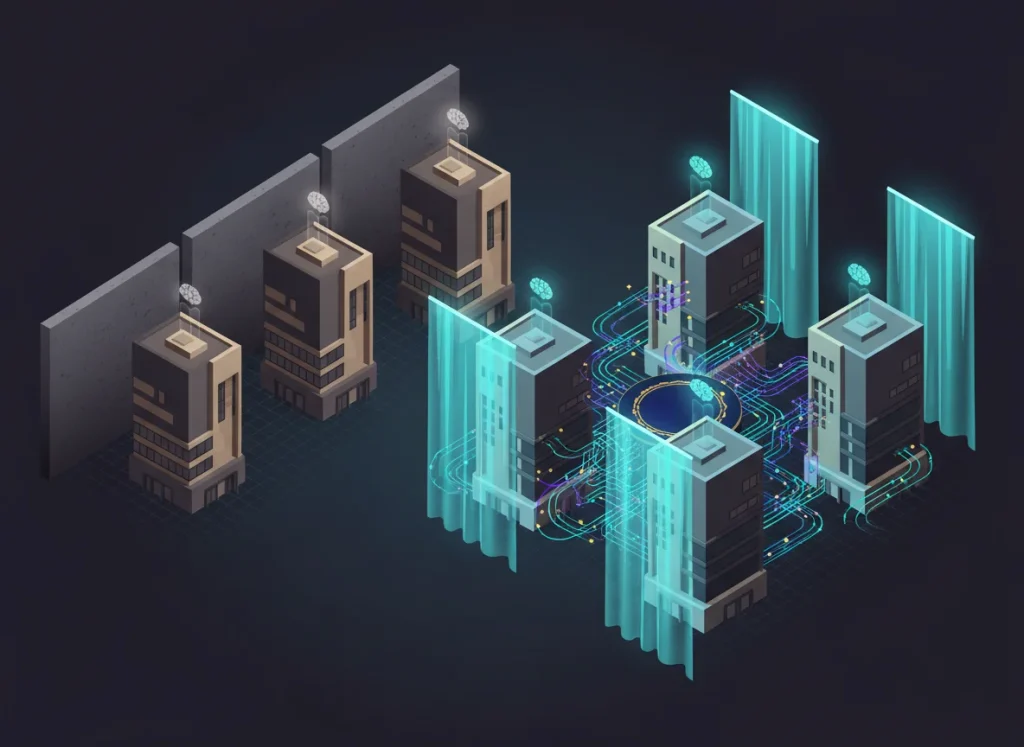
Durable AI transformation moves through five phases, each with its own dominant risk and its own forward-motion lever. Most organizations plateau between Phase 3 and Phase 4, the shift from "trying AI" to "embedded AI," because the cultural mechanics of integration are different from the cultural mechanics of experimentation. Knowing which phase your organization is actually in, rather than which phase leadership thinks it is in, is the prerequisite for choosing the right intervention.
Phase 1 is Awareness, typically weeks 1 through 4. Every employee knows what AI can and cannot do in the context of their role. Leadership publishes a clear AI vision. Department heads identify two or three workflows where AI will land first. Language gets standardized so that "AI assistant," "copilot," "agent," and "automation" each mean specific things rather than interchangeable buzzwords. The risk in this phase is vague leadership messaging that lets every department interpret "AI strategy" differently, which guarantees fragmented execution downstream.
Phase 2 is Literacy, typically weeks 5 through 12. Role-based training lands. Sales reps learn prompts that draft outreach, operations learns workflow automation, finance learns document extraction. Training is not theoretical, with every module ending in a live application to a real work artifact. Completion is measured by behavior change in the tools, not quiz scores. Investing in AI training services that integrate live artifacts is what separates literacy programs that produce adoption from ones that produce certificates.
Phase 3 is Experimentation, typically months 3 through 6. Employees are actively trying AI on their own work. An "AI use case library" collects wins and shares them weekly. The company celebrates visible experimentation and publishes lessons from failures. Leadership stops asking "are we using AI?" and starts asking "what are we learning?" The risk in this phase is shadow AI, where employees adopt tools the security and compliance teams have not approved, creating privacy and intellectual property exposure that does not surface until something goes wrong.
Phase 4 is Integration, typically months 6 through 12. AI workflows are embedded in standard operating procedures, job descriptions reference AI proficiency, onboarding curricula include AI fluency, and performance reviews evaluate AI usage as part of role expectations. Tool usage stabilizes at high rates because AI is simply how the work gets done. The risk in this phase is the middle-management squeeze. SOP updates, role adjustments, and performance review alignment are the levers that move organizations through this phase rather than past it.
Phase 5 is Innovation, typically year 2 and beyond. Teams are building proprietary AI workflows, agents, and data products that create compounding advantage. The company is not just using AI, it is becoming a company that ships AI as part of its product or service. This is where culture delivers competitive separation rather than just efficiency gains. The risk in this phase is infrastructure debt, where the proprietary AI work outpaces the underlying data, security, and platform foundation.
Table 3: Phase Transitions and What Moves a Company Up the Curve
| Phase | Main Risk | What Moves It Forward |
| 1. Awareness | Vague leadership messaging | Specific use-case identification per department |
| 2. Literacy | Training without behavior change | Training tied to live work artifacts |
| 3. Experimentation | Shadow AI, privacy incidents | Sanctioned tool list plus use-case library |
| 4. Integration | Middle-management squeeze | SOP updates, role adjustments, performance review alignment |
| 5. Innovation | Infrastructure debt | Internal AI platform investment, data team capacity |
Executive Buy-In and Workforce Agency
Executive alignment is the prerequisite, not the outcome. Conversations that actually move the C-suite share three features that distinguish them from generic AI strategy decks:
- Scenario specificity. Generic statements about how "AI will transform our industry" produce nodding, not commitment. A specific scenario such as "in 18 months, our top 20 sales reps will spend 40% less time on pre-call research, redeploying that time to live conversations, generating X incremental pipeline" produces budget.
- Risk framing tuned to the role. CEOs want opportunity framing. CFOs want downside quantification. COOs want operational disruption timelines. A single pitch deck for all three produces weak alignment. Build three variants or tailor the conversation live based on who is in the room.
- Proof from peer companies. Leaders believe other leaders. Case studies from named peer companies, ideally in the same industry and at similar scale, land harder than vendor decks or analyst reports. Spending disproportionate time finding the two or three case studies that speak directly to your industry produces more alignment than citing twenty generic ones.
Workforce agency is the parallel discipline that determines whether executive alignment translates into adoption. The companies succeeding at AI adoption are not just training employees, they are building employee agency: the confidence and permission to shape their own work with AI. Agency requires three things working together:
- Permission to experiment and fail visibly without career consequence, because employees who fear that an unsuccessful AI experiment will affect their performance review will avoid experimenting at all.
- Time within the work week (not as an after-hours ask) to explore and apply AI, because adoption cannot survive the math of asking employees to learn new tools on top of unchanged workloads.
- Voice in decisions about which tools to adopt and how workflows should change, because the people closest to the work have the clearest view of where AI helps and where it adds friction.
Organizations that provide all three see faster adoption curves and higher retention of the employees who become internal AI champions. Organizations that train but do not grant permission, time, or voice produce compliant certification holders who revert to old behavior the moment the training ends. The training is not the problem in those cases. The agency is.
Middle Management, Measurement, and the Hard Parts
The middle-management gap is the least-discussed and most-determinative factor in AI adoption. Three moves reduce it meaningfully:
- Relieve quarterly pressure during adoption windows by adjusting short-term targets for teams actively absorbing new tools. Managers who are punished for the learning curve will protect their teams from the curve, which means refusing to engage with the AI program. This adjustment is the single most important signal leadership can send.
- Retrain managers first, not last by giving middle managers a 4 to 6 week head start on role-specific AI literacy. When their teams ask questions, the managers have answers. When their teams push back, the managers can respond with specifics rather than deflecting.
- Rewrite performance review criteria to include AI proficiency. When AI usage is part of the evaluation, managers spend cycles coaching it. When it is extracurricular, managers treat it as noise competing with their quarterly objectives.
Measurement is the discipline that converts AI culture from a feeling into a set of observable behaviors. Track these five metrics quarterly:
- Active usage rate: the percentage of licensed employees using AI tools weekly
- Workflow integration depth: the number of standard operating procedures that explicitly reference AI steps
- Output quality uplift: measurable quality improvement on AI-assisted work compared to a pre-AI baseline
- AI proficiency score: competency assessment at onboarding and annually
- Innovation pipeline: the count of employee-generated AI use cases in the library per quarter
Teams that measure these quarterly and share results openly see culture change accelerate. Teams that only measure license utilization see adoption stall at Phase 3, because license usage does not distinguish between experimentation and integration. The measurement system is what allows leadership to tell the difference between a culture that is moving and a culture that has plateaued.
The hardest part of measurement is the discipline of looking honestly at the numbers. Many organizations adopt these metrics, generate the dashboards, and then quietly stop sharing them when the curve goes flat. The leaders who keep AI adoption moving treat the measurement system as a quarterly accountability mechanism, not a reporting layer, and share the numbers in the same forum where revenue and operational metrics are discussed.
Key Takeaways
- AI tool deployments fail in three repeatable ways: training without behavior change, executive enthusiasm without strategy specificity, and a middle-management gap between C-suite champions and individual-contributor experimentation.
- Conference Board 2026 research shows 43% of executives name AI as their #1 investment priority, with 31% prioritizing AI expertise and 27% prioritizing cultural readiness as the gating factor for value realization.
- The 5-phase adoption curve runs Awareness, Literacy, Experimentation, Integration, and Innovation, with most organizations plateauing between Phase 3 and Phase 4 where the cultural mechanics shift from trying AI to embedding it.
- Workforce agency (permission to experiment, time within the work week, voice in tool selection) produces faster adoption curves than workforce training alone, and the absence of agency is what reverts trained employees back to pre-training behavior.
- Culture is measurable through active usage rate, workflow integration depth, output quality uplift, AI proficiency score, and innovation pipeline. License utilization alone does not distinguish experimentation from integration.
- Middle managers are the determining factor in whether adoption reaches Phase 4. Adjusting their quarterly targets, retraining them first, and including AI proficiency in performance reviews are the moves that close the gap.
Putting the Framework Into Practice
The first step in applying this framework is honest baselining. Ask your leadership team to independently rate where the organization is on the 5-phase curve. The range of answers will tell you whether you have executive alignment (a narrow range, meaning leaders see the organization at roughly the same phase) or a hidden alignment problem (a wide range, meaning leaders disagree about the starting point itself). That diagnosis determines whether the first work is leadership alignment or workforce enablement, and starting with the wrong work produces faster motion in different directions rather than progress toward the next phase.
Once the baseline is set, the work proceeds by phase rather than by department. A company at Phase 2 needs different investments than a company at Phase 4, and confusing the two produces interventions that do not match the actual constraint. Phase 2 organizations need training tied to live work and visible leadership communication. Phase 3 organizations need use-case libraries and measurement systems that track behavior, not just usage. Phase 4 organizations need SOP rewrites, performance review updates, and middle-management retraining. Phase 5 organizations need internal platform investment and dedicated data team capacity. The right move at the wrong phase produces motion without progress.
Authority Solutions® works with organizations at each of these phases, applying the framework to the actual conditions of the business rather than running a generic engagement. AI tools are commoditizing faster than any software category in history, and the durable advantage belongs to organizations whose culture turns tool access into sustained capability.
Conclusion
AI tools are commoditizing. Culture is not. The organizations that will separate from peers by 2027 are the ones treating AI as a workforce transformation, not a procurement cycle, and moving deliberately through Awareness, Literacy, Experimentation, Integration, and Innovation.
To baseline your organization's position on the 5-phase curve and map the leadership, training, and measurement work required to move up, contact our team for an AI Culture Assessment.
Frequently Asked Questions
What is an AI-first culture?
An AI-first culture is an organizational environment where AI is integrated into how work gets done rather than added on top of existing workflows. It is the culture that produces sustained value from AI tools rather than a cycle of pilots that never scale beyond their initial deployment.
What are the phases of AI adoption?
Five phases: Awareness (everyone knows what AI can do in their role), Literacy (role-based training lands with live work artifacts), Experimentation (employees actively trying AI), Integration (AI embedded in SOPs and performance reviews), and Innovation (building proprietary AI workflows that create compounding advantage).
Why do AI initiatives fail?
Three common patterns: training without behavior change, executive enthusiasm without strategy specificity, and a middle-management gap between C-suite champions and individual-contributor experimentation. All three are culture failures, not tool failures, and each requires a different intervention.
How do you get executive buy-in for AI adoption?
With scenario specificity (named workflows, named metrics, named timelines), risk framing tuned to each executive role (opportunity for CEO, downside for CFO, disruption timelines for COO), and case studies from named peer companies in the same industry and scale.
How is AI culture change measured?
Track active usage rate, workflow integration depth, output quality uplift, AI proficiency scores, and the innovation pipeline (employee-generated AI use cases per quarter). Quarterly reporting and open sharing of results accelerate the culture shift compared to keeping the numbers in admin dashboards.
What is the biggest obstacle to AI adoption in most companies?
The middle-management gap. C-suite champions AI, individual contributors experiment, but middle managers feel squeezed between quarterly targets and the learning curve their teams are expected to absorb. Without middle-management conviction, adoption stalls at Phase 3 and never reaches Phase 4.
How long does it take to build an AI-first culture?
The 5-phase curve typically spans 18 to 24 months from Awareness to early Innovation. Awareness and Literacy can move in 3 months, Experimentation runs 3 to 6 months, Integration takes 6 to 12 months, and Innovation is ongoing. Compressing the timeline below 12 months usually stalls at Phase 3.
How do you handle employee resistance to AI?
Address resistance with permission, time, and voice rather than just training. Give employees explicit permission to experiment and fail, protected time within the work week, and a voice in tool selection. Resistance rooted in fear of replacement responds to transparent communication about job redesign.
What is the difference between AI training and AI agency?
AI training teaches employees how to use tools, while AI agency gives them the confidence and authority to reshape their work with those tools. Training without agency produces compliant certification holders. Agency without training produces shadow AI and privacy risk. Both together produce sustained adoption.
How does an AI-first culture differ from digital transformation?
Digital transformation is typically IT-led, tool-centric, and one-time. An AI-first culture is leadership-led, workforce-centric, and continuous. Digital transformation asks "what systems do we replace?" An AI-first culture asks "how does every role evolve?", a deeper and more durable shift.